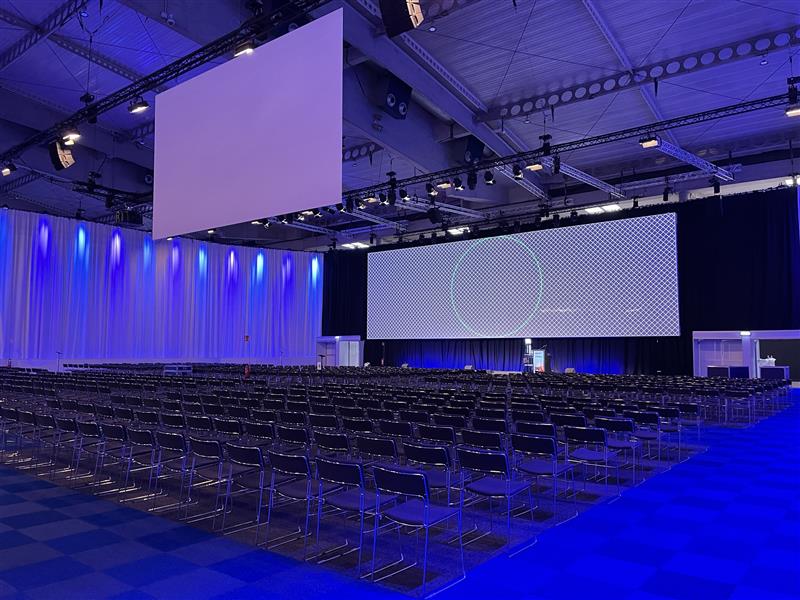
There's a common misconception that planning a large conference is simply a case of doing more of what you'd do for a smaller event. Book a bigger venue, invite more delegates and allow a little extra time for logistics. In reality, once delegate numbers reach 300 or more, the planning process changes completely.
Larger conferences introduce a level of complexity that many organisations only experience once every year or two. Internal teams are suddenly balancing multiple stakeholders, supplier relationships, accommodation, travel, technical production, communications and changing delegate numbers, all while continuing with their day-to-day responsibilities. It's no surprise that what begins as an exciting project can quickly become something that feels all-consuming.
At High 5 Events, we've been supporting organisations with conferences across the UK, Ireland and internationally for almost 20 years, and one thing we've learnt is that successful conferences aren't defined by what delegates see on the day. They're shaped by the planning, conversations and decisions that happen months beforehand. The earlier those foundations are put in place, the easier it becomes to make good decisions, respond to challenges and create an event that achieves its objectives without placing unnecessary pressure on the people responsible for delivering it.
A successful conference begins with a shared understanding of what success actually looks like
Before venues are shortlisted or keynote speakers are approached, it's worth asking a much simpler question: why are you holding the conference in the first place?
For some organisations, the priority is bringing colleagues together to share knowledge and strengthen relationships. Others are launching a new strategy, celebrating success, engaging customers or providing technical education. Every conference has its own purpose, and that purpose should influence every decision that follows.
We often find that organisations naturally focus on practical planning first because it feels tangible. Dates, venues and budgets all need attention, but they're much easier to manage when everyone involved understands what the conference is trying to achieve. If the objective is clear from the outset, conversations about the programme, venue, delegate experience and budget become much more straightforward because every decision can be measured against the same outcome.
That clarity becomes particularly valuable when several departments are involved, each bringing their own priorities to the project.
Conference planning quickly becomes a business-wide project
One of the biggest challenges internal teams face isn't organising the event itself. It's bringing together the people who all have a role in making it happen.
Marketing may be responsible for delegate communications and branding. Finance needs oversight of budgets and expenditure. Procurement is managing supplier agreements, while senior leadership understandably wants reassurance that the conference will support wider business objectives. Depending on the organisation, HR, IT and internal communications may also have an important part to play.
None of those perspectives is wrong, but they do need coordinating.
We've found that conferences tend to progress far more smoothly when responsibilities are agreed early and there's a clear understanding of who is responsible for making key decisions. Without that structure, projects can easily slow down while approvals are sought or conversations move in different directions. With it, everyone understands their role and the planning process becomes far more collaborative and efficient.
The detail grows far more quickly than most people expect
Choosing a venue often feels like a major milestone, but in many respects it's simply the point where the detailed planning begins.
Once a venue is confirmed, attention turns to room layouts, delegate flow, registration, accommodation, catering, audiovisual requirements, speaker schedules, signage, transport, accessibility, networking spaces and countless other operational details that all need to work together.
None of those decisions exists in isolation. A change to the conference programme may affect catering schedules. An increase in delegate numbers could alter room layouts or accommodation requirements. A revised speaker timetable might have implications for production, staging or transport. Every decision influences several others, which is why conference planning becomes increasingly interconnected as the event develops.
Managing that complexity isn't necessarily difficult when there's a clear plan in place, but it does require time, coordination and a thorough understanding of how each part of the project affects the next.
Delegate experience is shaped long before the conference begins
It's easy to think about the delegate experience in terms of what happens on the day itself, yet first impressions are usually formed much earlier.
The invitation, registration process and pre-event communications all contribute to how delegates feel before they even arrive. Clear joining instructions, timely updates and well-managed registration create confidence, while unclear information or inconsistent communication can generate unnecessary questions and uncertainty.
By the time delegates arrive at the venue, they should feel well informed rather than wondering where they need to be or what happens next.
The same principle continues throughout the event. Registration should feel welcoming and efficient, the programme should flow naturally, and delegates should be able to move between sessions without confusion or unnecessary delays. These are the details people often take for granted when they're done well, but they play a significant role in how professionally the conference is perceived.
From our perspective, creating a positive delegate experience isn't about adding unnecessary extras. It's about removing friction wherever possible so that attendees can focus on the content, the conversations and the opportunities the conference was designed to provide.
Finding the right venue involves much more than capacity
Venue finding is often approached as a practical exercise. Does it accommodate 300 delegates? Is there enough meeting space? Can it provide suitable accommodation?
Those questions are important, but they're only part of the decision.
A venue also needs to support the way the conference will operate. Delegates should be able to move comfortably between sessions without creating bottlenecks. Breakout spaces need to encourage conversation rather than feeling like corridors between meeting rooms. Production requirements, accessibility, transport links and accommodation all need to work together if the day is going to run smoothly.
Having visited and worked in venues across the UK, Ireland and overseas, we've learnt that the venue which looks best on a specification sheet isn't always the venue that delivers the best delegate experience. Understanding how a conference will function in practice often has a much greater influence on success than headline capacity figures alone.
Experience becomes most valuable when plans change
However carefully a conference is planned, circumstances almost always evolve.
Delegate numbers rarely remain static. Speakers occasionally need to amend travel arrangements or presentation timings. Business priorities can shift and, from time to time, unexpected situations arise that nobody could have predicted when planning first began.
The value of experience isn't that it prevents those situations from happening. It's that it allows them to be managed calmly and with minimal disruption because contingency planning has already been considered as part of the wider project.
Many of the conferences that clients describe as seamless have involved adjustments behind the scenes throughout the planning process. Delegates never notice because those changes have been anticipated, discussed and managed before they have the opportunity to affect the event itself.
Working with an event management partner should make life easier, not take control away
Some organisations hesitate before engaging an event management company because they're concerned about losing ownership of the conference. In practice, the opposite is usually true.
Our role is never to replace the people who know the organisation best. Instead, we work alongside internal teams, providing the experience, planning and coordination needed to turn their objectives into a successful event. Clients remain firmly in control of the decisions that shape the conference, while we take responsibility for managing the detail, coordinating suppliers and ensuring every stage of the project continues moving forward.
Over the years, many clients have described High 5 as an extension of their own team, and that's always been the way we prefer to work. Strong partnerships are built on collaboration, open communication and shared objectives, giving internal teams the confidence that every aspect of the conference is being carefully managed without adding unnecessary pressure to their workload.
Every successful conference has strong foundations
By the time delegates arrive, most of the important work has already been done.
Months of planning, careful coordination and countless conversations have created an event that feels organised because every detail has been considered in advance. Delegates may never see the planning that sits behind a successful conference, but they'll certainly notice the difference when everything works exactly as it should.
At High 5 Events, we've built our reputation by helping organisations deliver conferences that achieve their objectives while making the planning process more manageable for the people responsible for delivering them. Whether we're supporting an internal team with venue finding, managing complex logistics or coordinating every aspect of a large-scale conference, our aim is always the same: to remove pressure, provide reassurance and create events that leave a lasting impression for all the right reasons.
High 5 Essentials
Before you begin planning a conference for 300+ delegates, make sure you've covered these five essentials:
1. Define your objectives
Agree what success looks like from the outset. A clear purpose will guide every decision, from the venue you choose to the content you deliver.
2. Bring the right people together early
Identify key stakeholders, clarify responsibilities and establish who will make the important decisions throughout the planning process.
3. Set realistic budget parameters
Understanding your budget early helps you make informed choices and avoids unnecessary compromises later in the planning process.
4. Build a realistic timeline
Large conferences involve many moving parts. Allow enough time for venue sourcing, supplier coordination, delegate communications and contingency planning.
5. Look beyond venue capacity
The right venue should support your event objectives, delegate experience and operational requirements, not simply accommodate your numbers.
Whether you need support finding the right venue, managing suppliers, coordinating logistics or delivering your event from start to finish, High 5 Events works as an extension of your team to make the planning process simpler and less stressful.
Get in touch to discuss your next conference and discover how we can help you deliver an event that's memorable for all the right reasons.